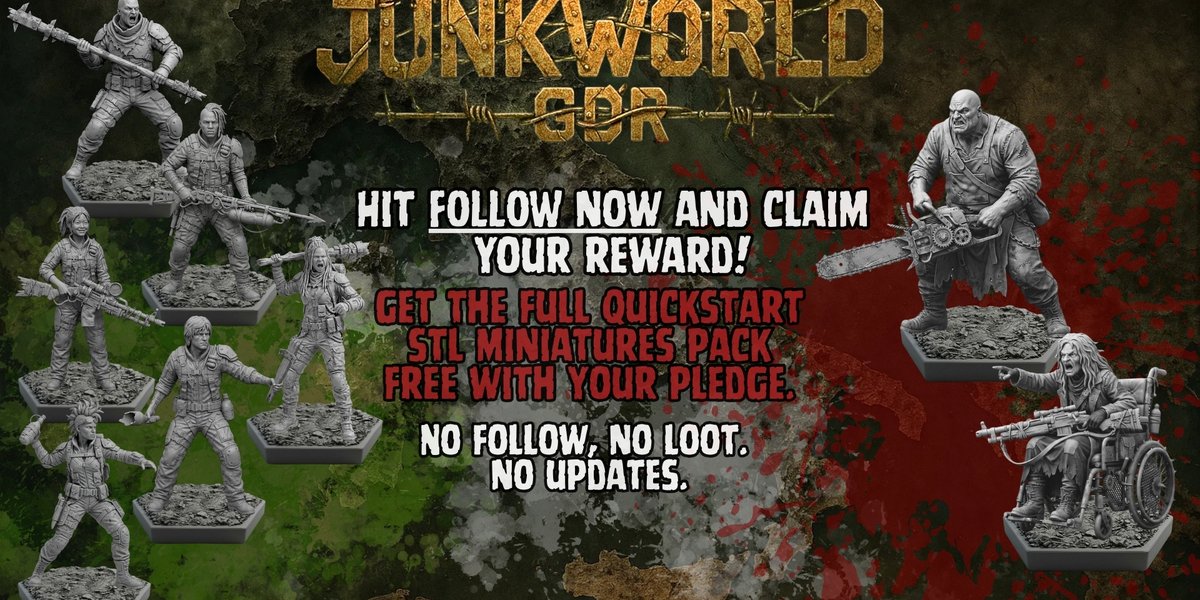
When a LARP Becomes a TTRPG: The Case of Junkworld
Born from LARP and shaped through mud, scrap metal, and unforgettable characters, Junkworld becomes a post-apocalyptic TTRPG where survival is only the beginning.
Some worlds are born on paper. Others begin around a table. And some take shape in the mud, among worn-out costumes, improvised weapons, shouted characters, and stories that keep living long after the event is over.
Junkworld belongs to that last category.
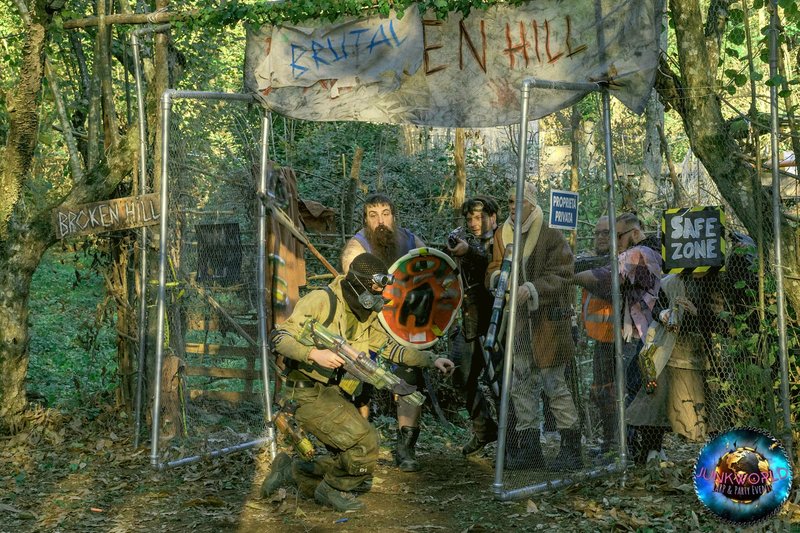
Before becoming a tabletop role-playing game, Junkworld was a lived, played, and constantly evolving LARP setting. A dirty, brutal, darkly ironic post-apocalyptic world where survival is not an epic goal, but a daily routine made of bad choices, scrap metal, hunger, violence, and decisions made far too quickly.
Now, that universe is taking a new step: becoming a TTRPG, bringing with it all the raw energy of its live-action origins.
Welcome to Junkworld
Junkworld is a world where the apocalypse did not arrive with one clean explosion. There was no neat ending, no cinematic mushroom cloud on the horizon. Society collapsed slowly, piece by piece, dragged down by violence, famine, and something no one truly understood until it was far too late.
Today, cities are steel carcasses. Roads are hunting grounds. The old rules that once held society together did not survive the fall.
In this world, surviving does not mean becoming a hero. It means lasting a little longer than everyone else.
Junkworld tastes of blood, rust, and dust. It is a place where trust is rare, resources barely last until nightfall, and every choice can become a sentence. It is a brutal post-apocalyptic setting, but also a deeply playable one, designed to confront characters with concrete dilemmas: what are you willing to lose in order to stay alive?
From LARP to Tabletop Role-Playing Game
The transition from LARP to TTRPG is never just a matter of converting rules. It is not simply about taking an existing world and turning it into character sheets, dice, and manuals. It means translating a physical, collective, immersive experience into a different form of storytelling.
In LARP, a world lives through players’ bodies, spaces, props, costumes, fatigue, and improvisation. In tabletop role-playing games, everything passes through voice, shared imagination, and mechanics.
Junkworld is born from exactly this tension.
The project began in 2017 with a group of characters known as The Family of Angels. From there, the idea kept growing until it demanded a world of its own. In 2021, the team began turning that setting into an original game system, mixing tabletop RPGs, wargames, and post-apocalyptic cinema.
The result is a game that does not simply aim to describe a world born from LARP, but to preserve its energy: unpredictability, chaos, harsh consequences, and the constant feeling that everything could go wrong at any moment.


A Fast, Tactical, and Ruthless System
At the core of Junkworld is a d10-based system, designed to be quick, flexible, and easy to learn. The goal is to keep tension alive without breaking the flow with overly complex calculations, especially when a fight, a chase, or a desperate decision should remain at the center of the scene.
The game combines narrative freedom with a tactical approach. Characters are not defined only by numbers, but by what they can do, what they can endure, and how far they are willing to go.
Character creation is built around three main attributes:
Physical, Mind, and Charm.
These support a wide range of abilities, areas of knowledge, and practical skills, including driving licenses and specialized competences. Survivors can be carefully built from scratch, or generated through tables designed to create unpredictable characters ready to be thrown into the Zone.
Progression also reflects the philosophy of the setting: you do not grow by counting bodies, but by enduring. Characters evolve through sessions played, rewarding survival, experience, and the ability to keep existing in a hostile world.
Crafting, Loot, and a Post-Atomic Renaissance
In Junkworld, loot is not an extra. It is one of the foundations of survival.
For years after the collapse, there was only scarcity. Then something changed. A group of survivors discovered a hidden laboratory in central Italy, filled with blueprints, instructions, and systems left behind by those who had seen the end coming.
The idea was simple: rebuild using what remained of the old world.
Scrap, waste, ruins, and wreckage became fuel, medicine, weapons, and tools. From this discovery came a true Post-Atomic Renaissance, a brutal and improvised rebirth built on junk, instinct, and necessity.
Every player can recover materials, craft tools, or upgrade equipment, but some classes take crafting to another level. The Scrap Smith, the Brewmaker, and the Bone Saw embody three different ways of turning ruin into power: mechanics, chemistry, and battlefield surgery.
In a world where everything breaks, those who know how to repair, modify, or recycle already have a serious advantage.
Survivors, Not Heroes
One of the most interesting elements of Junkworld is its roster of archetypes. These classes are not designed to represent classic heroes, but figures twisted and shaped by the apocalypse.
The Scrap Smith is the mechanic of the end times: holding reality together with crooked bolts, duct tape, and bad ideas that somehow work.
The Brewmaker treats chemistry like a street fight: creating serums, compounds, explosives, and solutions that may save your life or make everything dramatically worse.
The Bone Saw is doctor, surgeon, and butcher, often all in the same turn. Where official medicine is dead, they keep arguing with the Grim Reaper using sheet-metal prosthetics and deeply questionable tools.
Alongside them are the Road Warrior, a brutal armored tank; the Wild Rider, fast, reckless, and allergic to rules; and the Smooth Talker, a charismatic bastard able to use Psytrance to influence enemies’ minds through rhythm, voice, and suggestion.
Advanced classes push this imagery even further: from the Brain Squeezer, who takes Psytrance to disturbing extremes, to the Iron Singer, a battle musician who turns distorted riffs into psychophysical weapons, all the way to the Hunter and the Mutant, figures who live on the edges of a world already hostile enough.

The Threat of the Furious Fever
Every apocalypse has its central horror. In Junkworld, one of the most unsettling threats is the Furious Fever.
This is not just a disease. Its roots lie in a biomass that grew for centuries in a forgotten lake, contaminated by the bombs of the Ancient War. Over time, that shapeless mass evolved, producing invisible spores capable of infecting flesh and erasing free will.
The contagion began with animals, then reached humans. The first infected was a nameless young raider, but the fever did not stop with him. It consumed his entire gang, binding them to a single Collective Consciousness.
Since then, the Furious have become more than infected survivors. They are a presence. A legion. A force able to inhabit the most contaminated zones and transform the world, piece by piece, into something even less human.
Why This Transformation Matters
Junkworld is interesting because it reflects a growing direction in independent game design: worlds born from LARP becoming tabletop systems, manuals, campaigns, and expandable universes.
LARP is often a powerful narrative laboratory. Characters are tested live, factions develop through player choices, weak ideas are discarded, and strong ones survive because they actually work in play.
When a project manages to bring that experience to paper without losing its identity, the result can be much more than an adaptation. It can become a way to let that world live even for people who never attended the original events.
Junkworld seems to aim exactly for that: taking a setting born among mud, pizza-covered tables, extreme characters, and intense play sessions, and transforming it into a system accessible to new groups of players.
Not a copy of the LARP, but a new incarnation.
The Gamefound Campaign
Junkworld is now preparing for its next step through an official campaign on Gamefound.
The crowdfunding campaign is meant to turn years of independent development into a complete, polished product ready for the table. Player support will help expand the project, unlock new content, grow the game’s universe, and give final shape to a world born from the ground up, without a big budget, but with a very clear vision.
Supporting Junkworld does not simply mean buying a rulebook. It means betting on a project born from LARP, shaped through play, and now ready to bring its apocalypse to new tables.
Because in Junkworld, no one survives alone.
The campaign is available on Gamefound:
https://gamefound.com/en/projects/junkworldlarp/junkworld-gdr
Comments
You must be logged in to comment.
Recent posts
Bicolline launches official fundraiser after the fire: “Today, we rise again. Together.”
1 week, 1 day ago
Cookie Policy